


Keeping Up Appearances - Fashion And Class Between The Wars
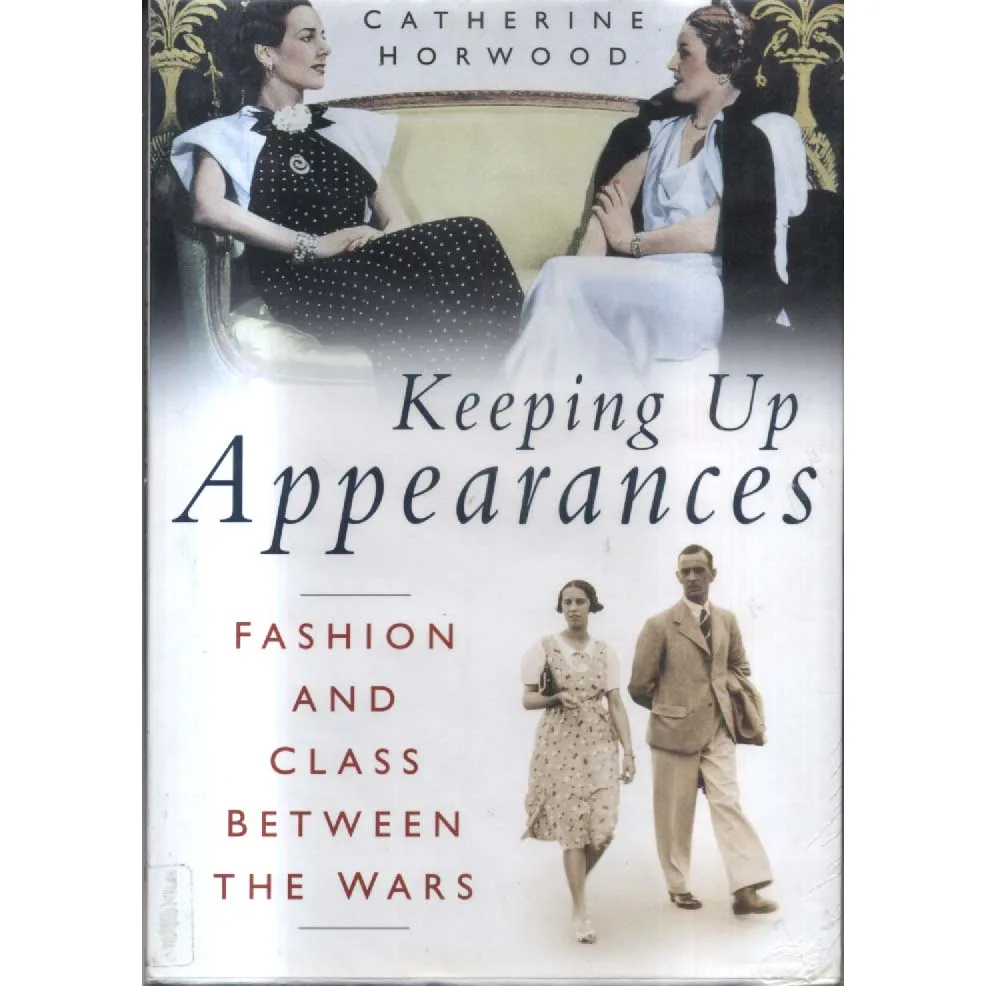
Publisher: Sutton Publishing
Format: Hardback
ISBN: 9780750939577
Long before Hyacinth Bucket began answering the telephone in her best drawing-room voice, the British had already perfected the exhausting national sport of appearing to belong to a slightly better class than the one paying the bills. In Keeping Up Appearances, Catherine Horwood examines fashion and social class in Britain during the 1920s and 1930s, when a hat was never merely something to keep off the rain, a tie could reveal moral collapse at twenty paces, and wearing the wrong clothes to the tennis-club dance might undo years of careful vowel management.
This is not primarily a parade of glamorous gowns worn by aristocratic women standing beside inconveniently large motor cars. Horwood is interested in the anxious middle classes: office workers, suburban families, young men attempting respectability and women expected to dress attractively without giving the impression that they had either spent money or thought too much about attracting anyone. Clothes had to indicate taste, position, occupation and breeding while appearing to have been selected effortlessly. The effort involved was, naturally, considerable.
Drawing upon contemporary magazines, advertisements, advice columns, personal testimony and Mass Observation material, Horwood investigates where people shopped, what they bought and what they feared their neighbours might infer from it. Mass production placed fashionable clothing within reach of more people, but economic uncertainty made every purchase significant. America supplied new influences, department stores supplied temptation, and etiquette supplied an almost limitless number of ways to get things subtly wrong.
Men were not spared. Collars, braces, hats, golfing clothes and evening wear all participated in a complicated signalling system understood by everyone except, presumably, the unfortunate fellow who arrived incorrectly dressed. Women entering offices faced an even more intricate problem: appearance could help secure and retain employment, but too much fashion suggested frivolity and too little suggested that one had abandoned civilisation. The ideal businesswoman therefore needed to look modern, competent, feminine, economical and unobtrusive, preferably before breakfast and on a modest salary.
The book ranges from shopping and office life to clothing worn at home, in the garden, at the seaside, at sporting clubs and on formal occasions. Top hats, tulle, gloves and matching accessories each receive their turn beneath the social microscope. Radicals, bohemians and dandies appear too, although even rebellion required the correct outfit. Refusing convention is so much more effective when one has carefully selected the clothes in which to refuse it.
Horwood’s subject may be fashion, but the book is really about aspiration, insecurity and the extraordinary amount of information human beings can attach to a strip of fabric. It shows how people used clothes to cross boundaries, defend positions and disguise financial difficulty—and how observers searched those same clothes for evidence that the wearer was not quite what he or she claimed to be. Between two world wars, Britain was changing rapidly, but apparently still had time to notice whether somebody’s gloves were suitable.
Illustrated, entertaining and rich in social detail, Keeping Up Appearances will appeal to readers interested in fashion history, women’s history, interwar Britain or the peculiar machinery of the British class system. It may also reassure modern readers that worrying about what to wear is not a recent affliction; previous generations simply did it with more hats.
This copy is in Good condition and is an ex-library book, so it may contain the customary stamps, labels and other evidence of former institutional employment. Unlike the interwar middle classes described within, it can no longer conceal its origins—but it remains perfectly respectable, decently presented and available from Crappy Old Books without the need for a reference from the tennis club.
Keep browsing: See more History books Other books by Catherine Horwood
